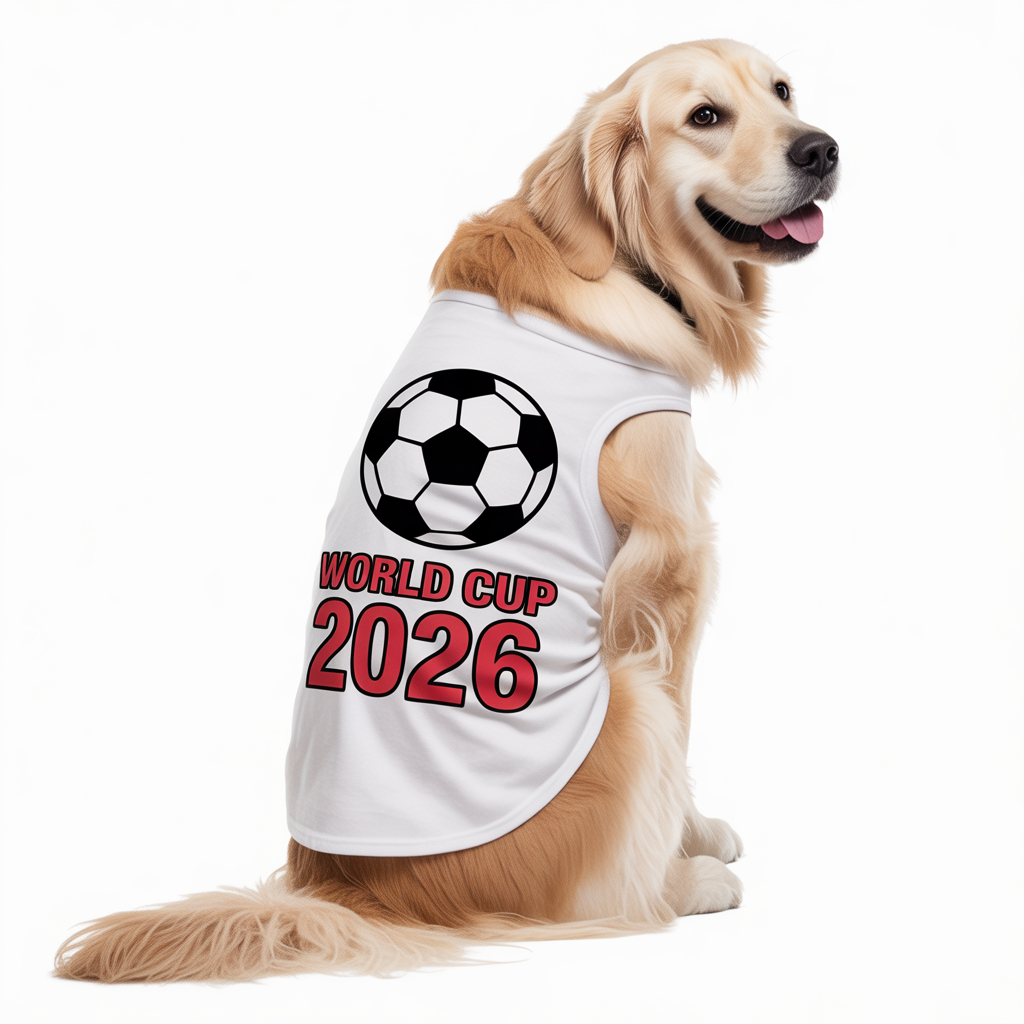
The 2026 FIFA World Cup is the biggest commercial opportunity the pet industry has seen in years. But opportunity alone doesn't pay the bills—execution does. This guide walks you through the entire OEM process for World Cup-themed pet products, from your first design sketch to the last pallet arriving at your warehouse.
We've done this before. Over the past 20 years, we've helped retailers prepare for the Olympics, previous World Cups, and every major holiday season. Here's what we've learned about getting event merchandise right.
The Market Opportunity in Numbers
Before diving into process, let's ground the decision in data:
| Metric | Value |
|---|---|
| Expected global viewers | 5 billion |
| Projected merchandise sales | $2.3 billion |
| Pet owners who buy event-themed products | 38% |
| Average spend on pet event merchandise | $25–45 |
| Peak purchasing window | 4–6 weeks before the event |
The pet segment specifically is outperforming general merchandise growth. During the 2022 World Cup, pet apparel sales increased 340% compared to the same period the prior year. Similar patterns appeared during the Olympics and European Championship.
This isn't speculation—it's established consumer behavior that compounds with each global sporting event.
Step 1: Define Your Product Line
The most common mistake retailers make with event merchandise: trying to do everything. You don't need twenty product variations—you need the right five.
Product Categories That Sell
Based on our production data from previous World Cups and major sporting events, these categories consistently perform:
1. National Team Jerseys for Pets
The bread and butter of World Cup merchandise. Focus on teams with the largest fan bases: Brazil, Argentina, USA, Mexico, England, Germany, France, and Japan. Offer 3–5 sizes per design to cover the most popular breeds.
Production tip: Jerseys require the most complex sizing setup. If you only have budget for one product category, make it this one—but don't try to cover all 48 teams. Eight to twelve team designs capture the vast majority of demand.
2. Bandanas and Scarves
Lower production complexity than full jerseys, which means lower MOQs and faster turnaround. Bandanas are impulse buys—they're cheap enough that customers purchase multiple designs for different match days.
Production tip: Bandanas are an excellent second product category because they complement jerseys without competing for the same customer dollars. Many customers buy both.
3. World Cup 2026 Branded Apparel
Generic "World Cup 2026" designs—featuring the tournament logo or host nation references—don't rely on any single team's performance. They sell throughout the entire event, not just during specific matches.
Production tip: Avoid using official FIFA logos unless you have licensing. "World Cup 2026 USA-Canada-Mexico" text designs are safe and effective.
4. Coordinated Owner-Pet Sets
Matching sets drive higher average order values and generate significant social media content. A customer wearing a team jersey alongside their dog in a matching version is your best marketing asset.
Production tip: Owner sizes (S–XL) and pet sizes (XS–XL) require separate production lines but use the same fabric and printing process, which keeps costs manageable.
5. Event Accessories
Leashes, collars, toys, and bandanas with team colors and World Cup branding. These are perfect add-on items at checkout and make excellent impulse purchases.
Production tip: Accessories are the easiest category to fast-reorder during the event when a specific team starts winning and demand spikes unexpectedly.
Product Line Recommendation
For a first-time World Cup pet product line, we recommend starting with:
| Priority | Category | Designs | MOQ (per design) |
|---|---|---|---|
| 1 | National team jerseys | 8 teams × 5 sizes | 500 units |
| 2 | Bandanas | 12 designs | 300 units |
| 3 | World Cup 2026 branded | 4 designs | 500 units |
| 4 | Accessories (collars/leashes) | 8 designs | 500 units |
Step 2: OEM Timeline — From Design to Delivery
Timing is everything with event merchandise. Here's a realistic timeline based on our production experience:
Phase 1: Design and Prototyping (Weeks 1–4)
Send your design concepts—or even rough sketches—to the factory. At Entrol, our in-house design team creates digital mockups within 48 hours and ships physical samples within 7–10 days.
What you'll receive:
- Digital mockups for approval
- Physical samples (2–3 units per design)
- Material specification sheets
- Cost breakdown per unit
Critical: Review samples thoroughly. Check stitching, fabric weight, print quality, sizing accuracy, and color matching against your brand guidelines. This is the moment to request changes—it costs nothing to adjust a sample, but fixing a production run is expensive.
Phase 2: Production (Weeks 5–10)
After sample approval, production begins. Typical timelines:
| Product Category | Production Time |
|---|---|
| Pet jerseys/apparel | 25–30 days |
| Bandanas/scarves | 15–20 days |
| Collars and leashes | 15–20 days |
| Toys and accessories | 20–25 days |
What happens during production:
- Raw material sourcing and testing
- Pre-production samples (1 unit from the actual production line)
- Mass production with in-line quality checks
- Final inspection before packing
Critical: Request a pre-production sample. This is a single unit pulled from the actual production run, not the prototype. It confirms that mass production matches your approved sample.
Phase 3: Shipping and Delivery (Weeks 11–14)
From factory to your warehouse:
| Shipping Method | Transit Time | Cost (relative) |
|---|---|---|
| Sea freight | 25–35 days | Low |
| Rail (China-Europe) | 18–22 days | Medium |
| Air freight | 5–7 days | High |
For World Cup merchandise, sea freight to North America typically takes 25–30 days. We recommend booking shipping space at least 3 weeks before production completes.
Phase 4: Sales Window (Weeks 15–20+)
Peak sales typically occur 4–6 weeks before the tournament starts and continue through the group stage. During the knockout rounds, demand shifts to teams still in the tournament.
Action: Keep 20% of your budget for fast reorders. When a team advances unexpectedly, demand can spike 5–10× overnight. Manufacturers with flexible production capacity can ship reorders within 10–15 days.
Step 3: Choosing the Right Manufacturing Partner
Not every factory can handle event merchandise. Here's what separates a good World Cup OEM partner from the rest:
Must-Have Capabilities
In-house design team. Event merchandise requires rapid design iteration. If your manufacturer outsources design, every revision adds days to your timeline.
Flexible MOQs. Event products carry higher risk than evergreen products. A partner offering 300–500 unit MOQs for custom designs lets you test multiple designs without overcommitting.
Quality control documentation. Ask for their QC process in writing. A professional factory provides inspection reports with photos at every production stage—not just a final check before shipping.
Compliance certifications. For North American and European markets, products must meet CPSIA and REACH standards. Your manufacturer should provide certification documentation upfront, not after you ask three times.
Red Flags to Avoid
- No physical address or refusal to arrange factory visits
- Quoted prices 30% below market average
- Communication takes more than 48 hours
- No mention of QC process or defect rates
- Pressure for 100% upfront payment
Step 4: Quality Control Checklist
Before you sign off on production, verify:
Materials
- Fabric weight and composition match approved sample
- Print colors match Pantone or brand guidelines
- Hardware (buckles, zippers, clips) is rust-resistant
- Labels and tags are correctly printed
Construction
- Stitching is even with no loose threads
- Stress points (armpits, collar, seams) are reinforced
- Sizing matches the size chart within ±1cm
- No sharp edges or choking hazards
Compliance
- Materials pass CPSIA lead and phthalate testing
- No small parts that could detach
- Packaging includes required warning labels
- Origin labeling is correct
Packaging
- Polybagged individually or in multi-packs as specified
- Hang tags attached correctly
- Carton weight within shipping limits
- Carton markings include PO number and design name
Step 5: Marketing Your World Cup Pet Line
OEM is half the battle. Getting products onto shelves is the other half.
Launch 6–8 weeks before the tournament. This gives you time for marketing campaigns, influencer partnerships, and pre-orders to build momentum before peak demand.
Leverage user-generated content. Create a branded hashtag and encourage customers to post photos of their pets in your products. Offer a discount code for tagged posts. Pet content in team jerseys is inherently shareable.
Segment your inventory by team popularity. Stock deeper on the 5–8 most popular teams and lighter on others. Use pre-order data to refine allocations before the event starts.
Prepare for viral moments. Have a reorder plan ready. When a dramatic match or upset happens, demand for specific teams can explode overnight. The brands that capture this demand are the ones that already have a reorder process in place.
The Entrol Advantage
We built our World Cup 2026 collection specifically to help B2B retailers capture this opportunity without the usual OEM headaches:
- 27 exclusive designs across jerseys, bandanas, accessories, and branded apparel
- MOQs starting at 300 units for standard designs, 500 for fully custom
- 7–10 day sampling with free revisions
- Five-stage quality control with documented inspection reports
- Full compliance documentation for US, EU, and UK markets
- Factory-direct pricing — no trading company markup
Our factory in Weihai, China, has been producing pet products since 2005. We've shipped to retailers in 50+ countries, including major chains like Petco, PetSmart, and Ross. We understand event merchandise timelines because we've met them—repeatedly.
Key Takeaways
- Start now. The optimal ordering window for World Cup merchandise is 3–4 months before the event. Every week of delay narrows your options.
- Focus your product line. Eight to twelve designs across four categories will outperform twenty scattered SKUs.
- Validate with samples. Order from multiple factories, compare side-by-side, and choose based on quality—not just price.
- Plan for reorders. Keep 20% of your budget reserved for fast reorders during the event. The teams that advance aren't always the ones you predicted.
- Choose a partner, not just a factory. Event merchandise is high-stakes. You need a manufacturer who communicates proactively, solves problems, and delivers on time.
The World Cup comes every four years. The brands that win are the ones that prepared months in advance—not the ones scrambling at the last minute.
Ready to Start Your World Cup 2026 Pet Product Line?
Browse our existing collection or bring your own designs—we'll have samples on your desk within two weeks.